Posts tonen met het label diversity. Alle posts tonen

woensdag 14 september 2016

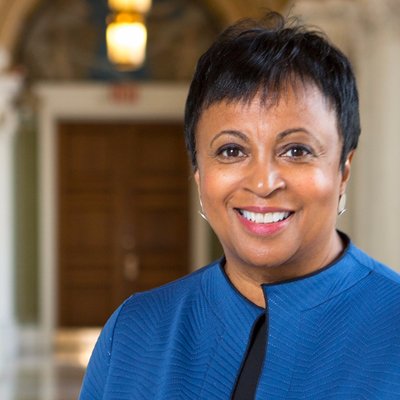
Waarom Carla Hayden geschiedenis schrijft

Foto: twitter.com/LibnOfCongress
Carla Hayden is de nieuwe Librarian of Congress.

Veel bibliothecarissen in Nederland zal het weinig uitmaken of schelen wie ze is en wat ze doet. Dan hoef je niet verder te lezen.

Ben je wel geïnteresseerd, lees gerust door. Carla Hayden is de eerste Afro-Amerikaanse en vrouwelijke Librarian of Congress. Er gingen 13 mannen haar voor, die behalve de laatste, dit tot hun dood waren.

Library of Congress
Maar wat is nu eigenlijk een Librarian of Congress? Of wat is de Library of Congress (LoC)? De LoC is de nationale bibliotheek van Amerika. De grootste bibliotheek van de wereld. Van alles wat er in Amerika gemaakt wordt in de kunsten (o.a. boeken, muziek, films, etc) wordt er een exemplaar bewaard.

Het was opgericht als hulpmiddel voor het Congres bij het behandelen van de lopende zaken, maar is eigenlijk de Koninklijke Bibliotheek van Amerika geworden.

Aan het hoofd van deze bibliotheek staat de Librarian of Congress. De dertien Librarians waren allemaal mannen en wit. Ze hadden veelal geen tot weinig echte ervaring als bibliothecaris. Daar is met Carla Hayden verandering in gekomen.

De vorige Librarians of Congress werden voor het leven benoemd. Dit hield in dat ze tot hun dood deze functie vervulden en dat er dan een nieuwe kwam. Barack Obama besloot echter om dit te wijzigen naar een benoeming van tien jaar. De dertiende Librarian of Congress werd o.a. mismanagement verweten en niet in staat te zijn om de LoC de 21e eeuw in te loodsen.

Baltimore
Er is genoeg informatie te vinden over Carla Hayden en haar achtergrond. Maar haar laatste baan was directeur van de bibliotheek in Baltimore. Ze was hier directeur toen in 2015 grote onlusten uitbraken na (dodelijk) politiegeweld tegen Freddie Gray.

Tijdens de inauguratie werd verteld wat ze deed in Baltimore. Ze hield de bibliotheek open. 's Avonds en 's nachts waren de rellen en 's ochtends smeulden de autowrakken voor de deur van de bibliotheek. Maar elke ochtend deed ze de deuren van de bibliotheek open. Om de bewoners van Baltimore kansen en een veilige plek te bieden. Om de kinderen te helpen, maar ook om de protesterende mensen kansen te bieden.

Een ander voorbeeld was dat Carla Hayden pro deo advocaten de bibliotheek in liet in het programma Lawyers in Libraries. Deze advocaten hielpen mensen met een strafblad om nieuwe kansen te geven in het leven. Een baan zoeken o.a. Er kwamen 600 mensen op de eerste dag af. Sommigen wachtten 6 uur om geholpen te worden.

Elke bezoeker (meestal donker en man) kwam uiteindelijk bij de bibliothecaris uit. En hij/zij kreeg een bibliotheekpas. Een gratis bibliotheekpas. En ze vroegen: "Vertrouw je me dat ik een boek meeneem?" "Kan ik hier elke dag komen?" "Kan ik hier gebruik maken van de computers?" Het antwoord op deze vragen, dankzij Carla Hayden waren: "Ja."

Dat is de bibliotheek.

Uitzonderlijk
Wat er in Amerika is gebeurd, is uitzonderlijk. Carla Hayden zei het zelf in haar speech. Ze stamt af van mensen die het recht om te lezen (en te leren) werd ontzegd tijdens de slavernij in Amerika. Nu heeft zij de mogelijkheden om elke Amerikaan en daarbuiten de kansen te geven om te leren van het verleden en het heden.

Immers tijdens de Baltimore-protesten kwam er een meisje naar haar toe en zei: "Waarom is er zoveel aan de hand?" Maar dankzij de collectie van de LoC kan er nu gekeken worden naar wat Rosa Parks schreef na haar arrestatie. Ze schreef: "Mijn hele leven ben ik klein gehouden en ik voelde dat het niet meer langer aan kon."

Rolmodel
Dat een Afro-Amerikaanse vrouw deze rol als Librarian of Congress heeft gekregen is een groot goed. Bibliotheken worden steeds minder wit in Amerika. Maar deze dame is een rolmodel voor alle Afro-Amerikaanse bibliothecarissen. Voor alle vrouwelijke bibliothecarissen. Voor alle donkere mensen in de westerse wereld.

Eigenlijk kan ik niet eens beschrijven wat het betekent, omdat het zoveel betekent.

De inauguratie kun je hier terugkijken.
De introductie van Carla Hayden als genomineerde kun je hier zien.

woensdag 20 juli 2016

The White Library

This is a translation of the Dutch blogpost De witte bibliotheek. Since this issue is not only important for Dutch libraries and international librarians were interested in the piece, I decided to translate it into English.

---------------
Cultural diversity is nowadays a hot issue. But is that also the case in libraries? Libraries have a strong mind to empower people. "We" teach our visitors how to read, how to enjoy art and culture, we provide them space to debate and to meet each other.

Visitors with foreign roots visit the public libraries. Surinamese, Dutch Caribbean, Moroccan, Turkish, African (from all countries) and recently Syrian visitors.

The so called "allochtonen" (not native Dutch people). But also the people from other countries who are not considered to be "allochtoon" (e.g. expats, American, German, English people). I don't like the terminology of we/them.

We are all Dutch with diverse roots. Some people have and Surinamese and Chinese and Dutch Caribbean roots. Through this mixed cultural diversity strict backgrounds are fading.

This is not only about adults, but also about children (and their parents). Children can pick a lot of books in the public library. But it seems like these children can only lend books about children with Dutch roots. These children can't identify themselves with the protagonists in the books.

Children books
On April 2nd this became apparent during the Afternoon of the Children's Book in de Amsterdam Public Library. When you look at the pictures, you can see the lack of diversity of children's book authors. How is that possible? It seems like that publishers think that the authors from foreign origin are not good enough or they think these authors are not present.

That is rubbish of course. There are authors who write for adults. They are welcomed by the publisher (or not), but they get their books published anyway. Apparently children's books have other standards.

It is said that the children and their parents with foreign roots are not interesting for publishers. They borrow the books, but they do not buy books. What will not be sold, will not be published.

Public libraries
Back to the public libraries. Public libraries are lead by directors and they are supported by other staff: marketing, public relations, education and front office.

In the public libraries with dark skinned librarians in the front office, the back office is for 99% white. This white back office decides which programs are organised, who is their new colleague, when certain issues are discussed, etc.

I asked someone who visits public libraries regularly whether she encounters dark librarians. In her private life, in her life as an artist and her daily work. She was shocked and said "No".

Keeping the white library white
In the USA there is a genuine library school on college level. There is a special program to cultivate cultural diversity. What became apparent... This programs keeps the white library white.

Thanks to Ton de Kruyff, who tweeted this blogpost. Another interesting blogpost from the US. This is not only about public libraries, but also about the college libraries and other libraries.

During the four years of my study Information Services and Management there was just one Surinamese student. The rest... Oh well.

In the US the perspective of librarians and libraries are mostly from the white middle class. That situation is not different in Holland.

The wages for staff librarians are usually higher than the front office librarians. Most of the time the back office is staffed by women, who already have a hard working husband. They are middle-aged with a parttime contract. So they have their lives all sorted out.


The world of library directors is also white. The header photo of the Dutch Library Association (VOB) Twitter account shows just white people. The amount of men and women are about equal.

Code Cultural Diversity
The VOB does name cultural diversity in library organisations. But they forward you to the website Code Cultural Diversity where this code is published (PDF).

There is no real policy. I don't think local public libraries follow a policy to attract librarians with foreign roots.

My own experiences with public libraries show the same. Working from Rotterdam I have a lot of correspondence with public libraries. I only know one person with foreign roots along my contacts.

Scroll through the members of Biebtobieb and consider who does what in the world of libraries.

Different
It can be different. In 2015 I was present at the opening of the Youth Month in the Rotterdam Public Library. I was the only partner with Dutch roots. The other people from Afghanistan, Suriname, Dutch Caribbean, Cabo Verde etc.

The librarian who runs the so called Youth Floor has also roots from outside Holland. She is not organising activities for people from those countries, but she organises activities with them. And that is the force.

"We"
It is quite weird "we" organise activities for "them". And that "they" are not well represented in the public libraries. Actually nothing changed in eight years.

How can "we" organise something for "them" without knowing "what" they really want and need?

You will get a genuine enrichment for the libraries, for the librarians, for the world of libraries and really the visitors, when you add the backgrounds from outside Holland.